Library Mirabilis · The Journal
Liminal Places in Folklore: Why Thresholds Frighten Us
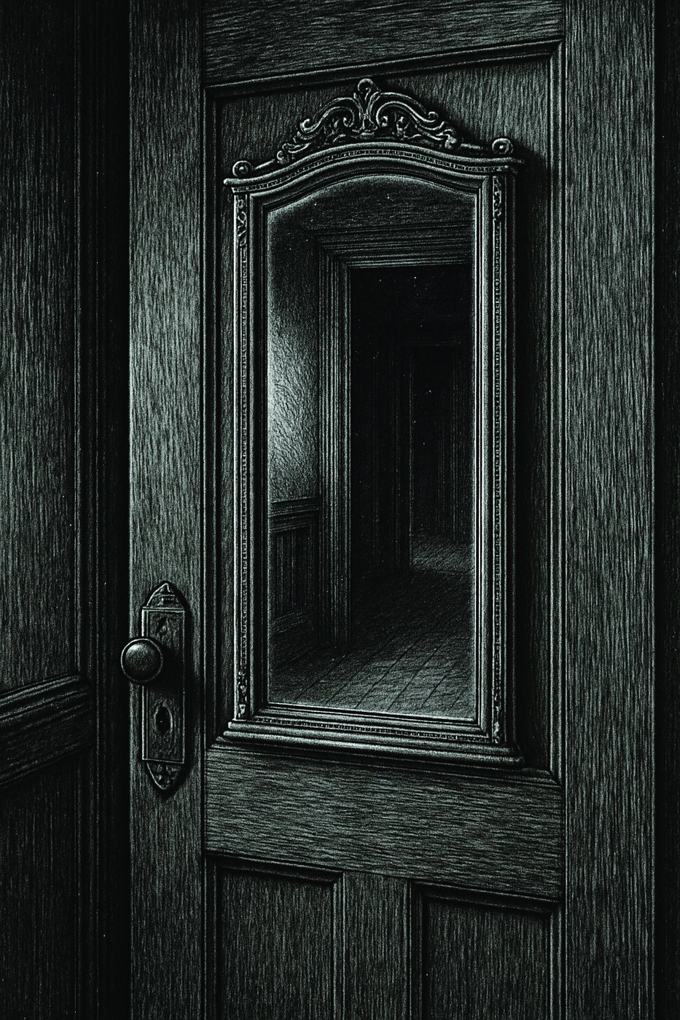
Liminal space folklore rests on one old idea: the in-between is dangerous. A doorway is neither inside nor out. A crossroads belongs to none of the roads that meet there, midnight belongs to neither day, and the shore is neither land nor sea. Folk belief in many cultures treats these places and hours alike, as spots where the ordinary rules lapse and something else may take over. Anyone who has felt uneasy in an empty stairwell at 3 a.m. is in old company.
The threshold: why the bride is carried
The door has gathered more customs than any other boundary in the house. Brides are carried over the threshold. Horseshoes are nailed above it for luck. On the corpse roads of Britain the dead were carried with their feet pointing away from home, so that they would not find the way back. Each custom treats the doorstep as a border, a place where something has to be checked, paid or kept out.
The crossroads: burials, bargains, and the devil
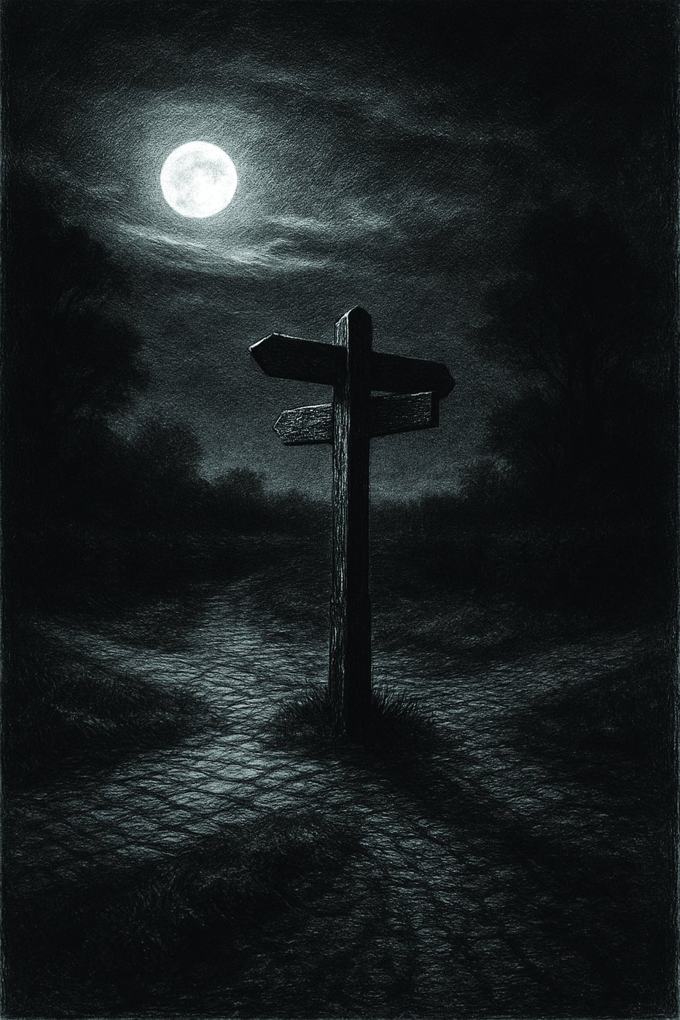
Where roads meet, no single parish or household has charge, and folklore put there everything the village did not want inside it. Suicides and executed criminals were buried at English crossroads, sometimes with a stake through the body, until the Burial of Suicides Act of 1823 forbade both. The usual explanation was that a spirit rising there would not know which road led home. The crossroads is also where bargains get struck, in European tales of the devil at midnight and in the American blues legend of a guitarist who met the devil there and came away playing better than any man should. English still keeps the image: to be "at a crossroads" is to stand between one life and the next.
Bridges, stiles, and the water between
In northern European belief spirits cannot cross running water on their own, so a bridge is both a safe passage and a contested one. Europe has dozens of devil's bridges, and many share a plot. At Devil's Bridge in Ceredigion, where the river Mynach has been bridged since at least the twelfth century, the story goes that an old woman's cow strayed to the far bank, and the Devil offered to build a bridge in return for the soul of the first living thing to cross. When it was finished she threw a crust of bread over the river, her dog ran after it, and the Devil had to make do with the dog. Stiles, fords and ferry crossings gather similar stories. The corpse roads, along which the dead were carried to distant mother churches, left a whole map of haunted ways, covered in a companion piece on corpse roads and crossroads.
Thresholds of time: midnight, midsummer, and the turning year
Time has its in-between places too. Midnight, the witching hour, is neither today nor tomorrow. Noon has its own spirit in Slavic belief: Lady Midday, a woman in white who walks the field boundaries in the hottest part of a summer day and strikes harvesters with heatstroke or madness, or stops a traveler with hard questions and punishes a wrong answer. The great turning points of the year, Halloween and Walpurgis Night, midsummer and midwinter, are the nights when witches, fairies or the dead are most often said to be abroad. The Victorian habit of telling ghost stories at Christmas belongs to the same pattern, with the dead given a place at the darkest turn of the year.
Why the feeling survives
The folklorist Arnold van Gennep gave the pattern its modern name in The Rites of Passage (1909), taking it from the Latin limen, threshold. In his scheme every rite has three stages, and the middle one is liminal: the person has stopped being what they were and is not yet what they will be. In 1967 the anthropologist Victor Turner called that stage "betwixt and between" and made the idea widely known. Spaces built for passing through, such as an empty airport at night, a stairwell between floors or a long hotel corridor, can produce a version of the same unease in people today, a sense that the usual rules may not hold.
The full exploration
Attics and cloakrooms, corpse roads and desire paths, abandoned platforms and overgrown gardens are all in Liminal Spaces: Thresholds, Crossings, and Places In Between by A. R. Wells, the Library Mirabilis book on the architecture, folklore and psychology of places that are neither one thing nor another, illustrated in the Victorian manner. It is written for people who find themselves pausing in doorways.
Hear of new volumes first
Leave your address and we will write when a new book or a new story arrives.