Library Mirabilis · The Journal
The Ghost Story as Christmas Gift: A Tradition Revived
For the Victorians a ghost story could be a Christmas present you wrapped. Chapman and Hall published A Christmas Carol on 19 December 1843, six days before Christmas, bound in red cloth with gilt-edged pages and priced at five shillings. John Leech supplied four hand-colored etchings and four wood engravings. Dickens insisted on the expensive finish, and it cut his profit on the first edition to £230, far short of the £1,000 he had hoped for. The first printing of 6,000 copies still sold out by Christmas Eve.
Every December after that brought its haunted reading. Dickens's magazines put out extra Christmas numbers, and in 1859 All the Year Round gave its readers The Haunted House, with a ghost story for each room by a different writer. A book or a magazine with a shiver in it was something people bought in December and passed around the house.
The habit faded with the fireside. It is easy to bring back.
Why a frightening book is a warm gift
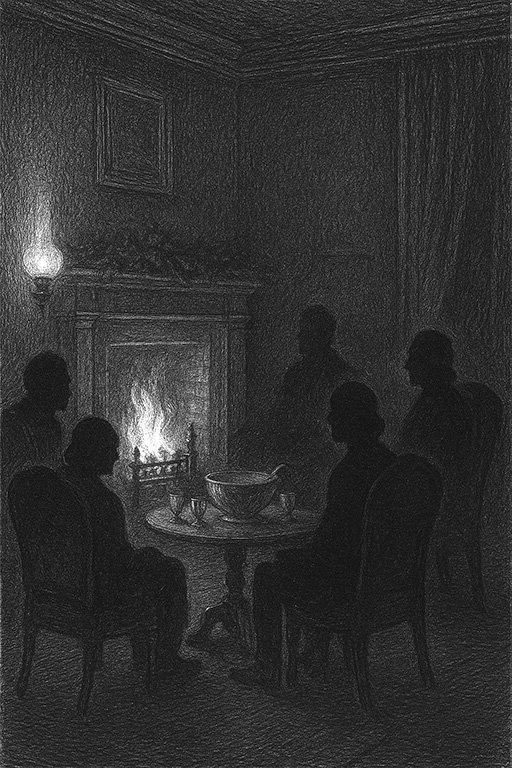
Ghost stories were written to be heard. M. R. James wrote his for Christmas readings at King's College, Cambridge, and dedicated Ghost Stories of an Antiquary (1904) to "all those who at various times have listened to them." A story like that needs a room with people in it, one reading and the rest keeping still near the fire. A book of ghost stories handed over at Christmas brings that evening with it.
Jerome K. Jerome made fun of the custom in 1891 and confirmed it in the same breath: "Whenever five or six English-speaking people meet round a fire on Christmas Eve, they start telling each other ghost stories." He was writing comedy, and he could count on every reader recognizing the scene.
The rules of the gift, then and now
Look at the Carol again and you have most of what a seasonal book needed. It was made to be looked at, with color plates and gilt edges, because the object was part of the present. It was short enough to read aloud over an evening or two. And it belonged to the season, down to the dead business partner rattling his chain on Christmas Eve.
Anyone reviving the custom needs about the same. Find one good-looking book and a fire or its nearest equivalent. Then read one story a night in the week between Christmas and the new year, slowly, and leave a pause after the last line before anyone speaks.
What to give
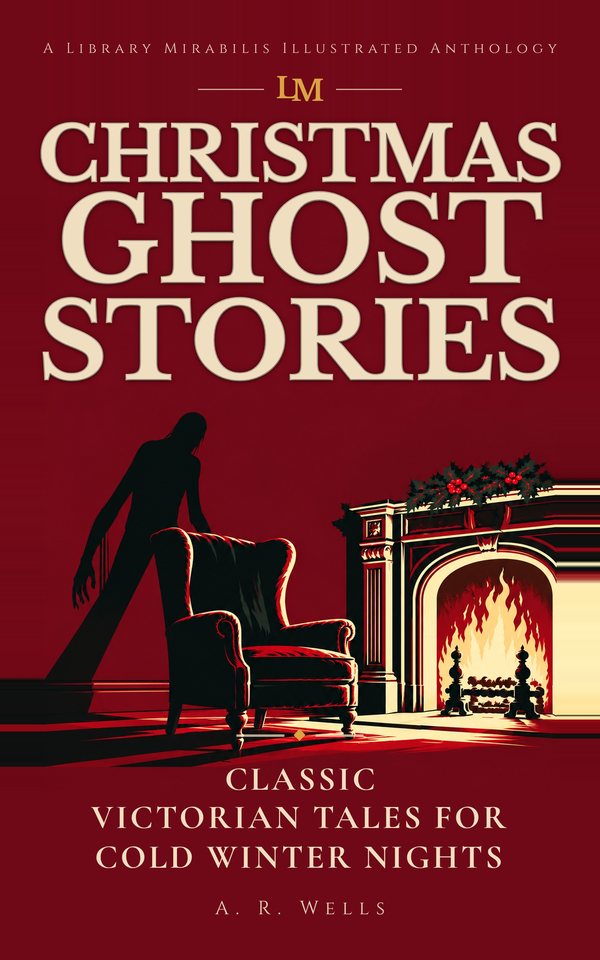
This is the season the Library was built for. Christmas Ghost Stories gathers eight tales by Elizabeth Gaskell, Buisson, Charlotte Riddell, Amelia B. Edwards, M. R. James, E. F. Benson, Arthur Conan Doyle and Jerome K. Jerome. Gaskell's "The Old Nurse's Story" is there, first printed in Dickens's Christmas number for 1852, along with Edwards's "The Four-Fifteen Express," James's "Number 13" and Benson's "Between the Lights." Each story has its own introduction, the whole book is illustrated in the manner of the old gift books, and the hardcover is made to sit on a table. Our guide to the best Victorian Christmas ghost stories goes through the tales themselves, and the custom's history is told in why the Victorians told ghost stories at Christmas.
If you are giving it to a household, give it before Christmas Eve so the reading can start that night.
The last instruction
Whatever book you give, write a line on the flyleaf saying it is to be read aloud after dark. The book is half the present. The evening you spend reading it together is the other half.
Hear of new volumes first
Leave your address and we will write when a new book or a new story arrives.