Library Mirabilis · The Journal
The Victorian Séance: How the Dead Became a Parlor Game
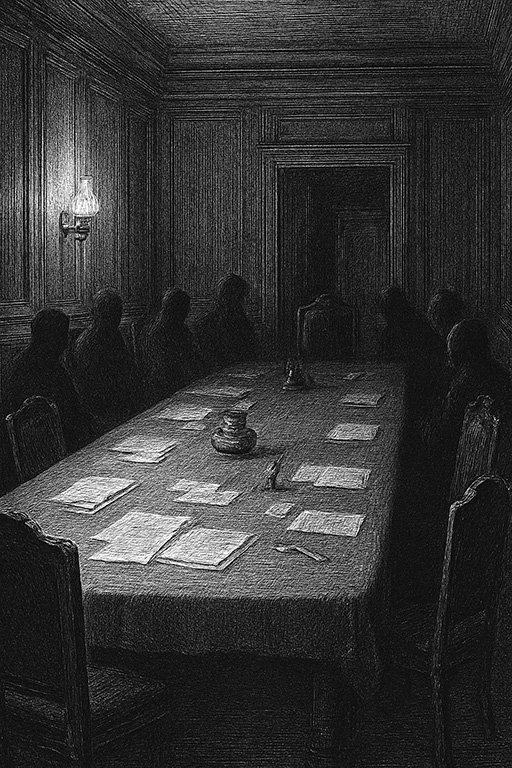
Victorian séance history begins with a prank. On the night of March 31, 1848, in a rented farmhouse in Hydesville, New York, Maggie and Kate Fox, aged about fourteen and eleven, got their household to believe that the knocking in the walls was a spirit answering their questions. They called it Mr. Splitfoot, a country name for the Devil. Their much older sister Leah took over their careers, and on November 14, 1849, the girls rapped for a paying audience at Corinthian Hall in Rochester. Within a few years the séance, a ring of joined hands around a table in a dim parlor, had become a fixture of the age.
Forty years after Hydesville, on October 21, 1888, Maggie stood on the stage of the New York Academy of Music in front of about two thousand people and showed them how the raps were made: she cracked the joints of her toes. The New York World printed her signed confession the same day. A year later she told the New York Press that the confession had been forced out of her for money and took it back.
Why the nineteenth century wanted its dead back
Spiritualism arrived when death was close at hand. Parents buried children as a matter of course, and the American Civil War, and later the Great War, left grief on a scale no one had seen before. Geology and Darwin were pressing hard on the churches. A telegraph could carry a message across a continent along a wire nobody could see, so a message from a little farther off did not seem so absurd. The pulpit asked for faith, and the séance offered evidence, or something shaped like it, in the sitter's own front room.
The movement filled lecture halls and supported its own newspapers, and it reached people of real standing. Between 1871 and 1874 the chemist William Crookes sat with the medium Florence Cook and the materialized spirit she called Katie King, and in 1874 he published a report concluding that Cook, Kate Fox and Daniel Dunglas Home were producing genuine phenomena. Arthur Conan Doyle, who had invented the most famous rationalist in fiction, later became spiritualism's best-known public defender.
What actually happened at a séance
The classic séance was theater built from parlor furniture. Sitters joined hands around a table, the lamps went down, and the medium went to work. Very often the medium was a woman, since this was one of the few public platforms open to women at the time. Tables tilted and rapped out the alphabet, and planchettes and later talking boards spelled out messages. In the more ambitious circles trumpets floated, hands touched the sitters in the dark, and figures in pale drapery walked the room.
Some of it was grief given a shape to follow, and a great deal of it was fraud. Exposing mediums became a sport of its own. In 1880 George Sitwell seized the spirit figure during one of Florence Cook's sittings, and the medium was found to be missing from her chair. In January 1882 the Society for Psychical Research was formed in London, with the philosopher Henry Sidgwick as its first president, to weigh the evidence properly. Its members sat through dark rooms with notebooks open and exposed the slate-writing tricks of the medium William Eglinton in 1886 and 1887.
Why the séance made horror better
The séance gave fiction a new kind of ghost. The old ghost came uninvited. The séance ghost was summoned, and the living had asked for whatever turned up. In Arthur Conan Doyle's "Playing with Fire" (1900), a circle of London sitters gets more than it bargained for, and Rudyard Kipling's "Wireless" (1902) puts an early radio experiment in a chemist's shop and lets something come down the line that nobody in the room expected. Again and again these stories turn on one fear: that the voice at the table might be honest, and might belong to someone who has not grown kinder since death.
Read the stories the séance produced
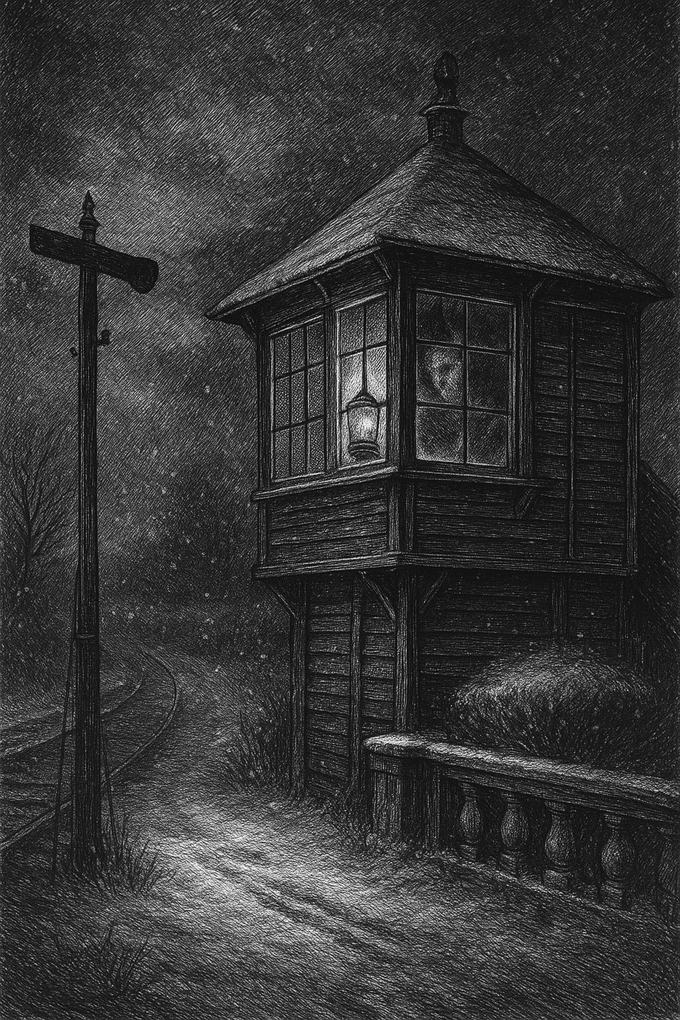
Our roundup of the best Victorian séance stories walks the lineup, and Dickens's "The Signal-Man" is on the Story Shelf. For the fireside side of the tradition, Christmas Ghost Stories gathers eight classic tales, each introduced and illustrated.
Hear of new volumes first
Leave your address and we will write when a new book or a new story arrives.