Library Mirabilis · The Journal
Charles Dickens, Ghost-Story Editor: The Man Who Ran Christmas
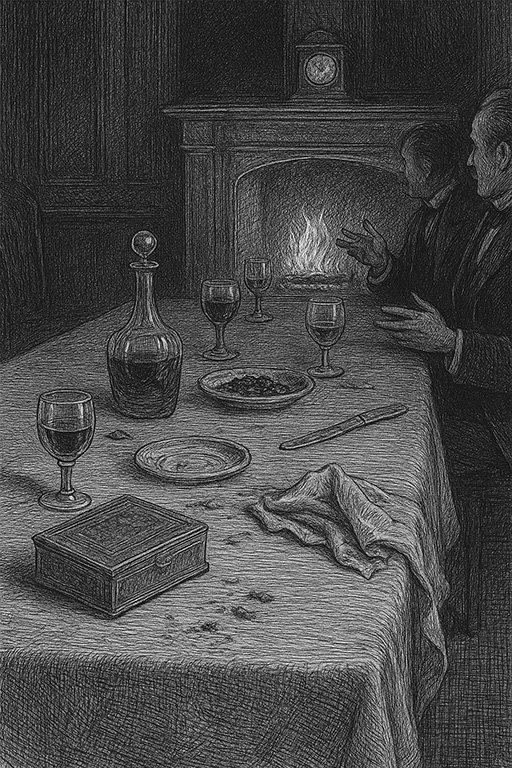
In December 1859 the readers of All the Year Round bought a special Christmas issue called The Haunted House. Dickens wrote the frame: a man rents a house with a bad name and fills it with friends, and each guest takes a bedroom and later reports what haunted it. The rooms went to different writers, among them Elizabeth Gaskell, Wilkie Collins, Adelaide Anne Procter, George Augustus Sala and Hesba Stretton. Most people know Charles Dickens as the author of A Christmas Carol. For the better part of two decades he was also the editor who decided what much of the country would read by the fire in December.
The writer
A Christmas Carol came out on December 19, 1843, and he followed it with more Christmas books. The uncanny runs all through his work, as far back as The Pickwick Papers, where a bad-tempered sexton named Gabriel Grub is carried off by goblins on Christmas Eve.
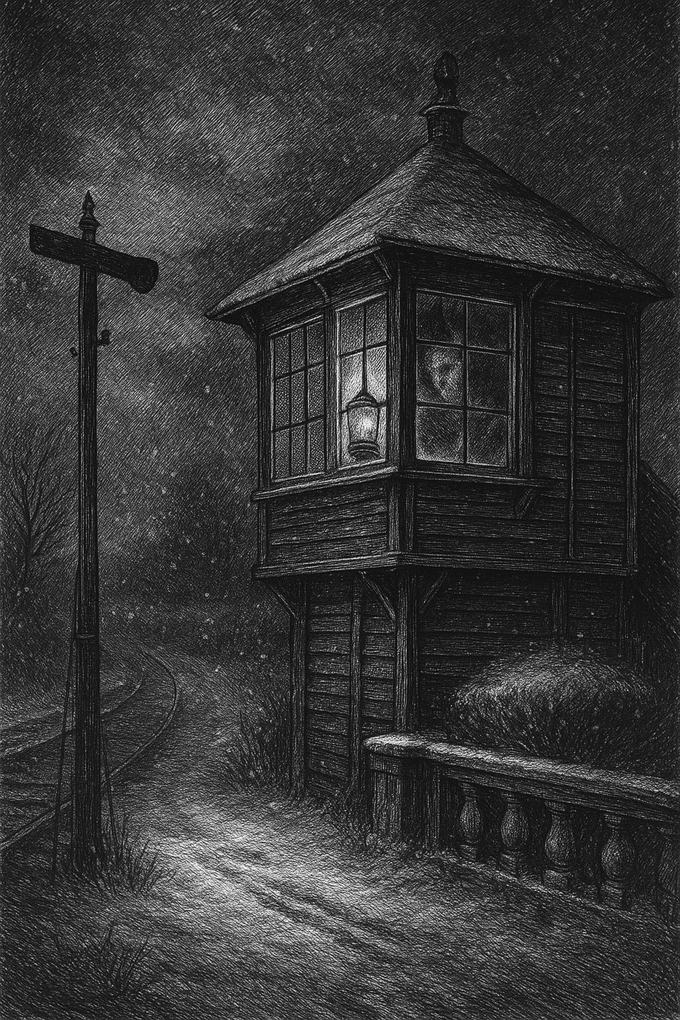
His best ghost story came late. "The Signal-Man" appeared in December 1866, about eighteen months after the boat train Dickens was riding ran off a viaduct at Staplehurst in Kent. Ten people died. Dickens climbed out of his carriage and spent the afternoon among the injured with his flask of brandy and his hat full of water. Afterward he was nervous on trains and avoided them when he could. The story he wrote out of that is about a signalman in a deep railway cutting who keeps seeing a figure by the red light at the tunnel mouth, waving at him as if to warn him of something. You can read it on our Story Shelf.
The editor
His wider influence came from the editor's desk. He founded Household Words in 1850 and All the Year Round in 1859, and each December he put out an extra Christmas number, planned months ahead, with a frame of his own and a company of writers to fill it. Gaskell's "The Old Nurse's Story" first appeared in the Household Words Christmas number for 1852. Amelia B. Edwards wrote for the All the Year Round numbers almost every year from 1860 to 1864. The last number Dickens produced, No Thoroughfare in 1867, he wrote with Collins.
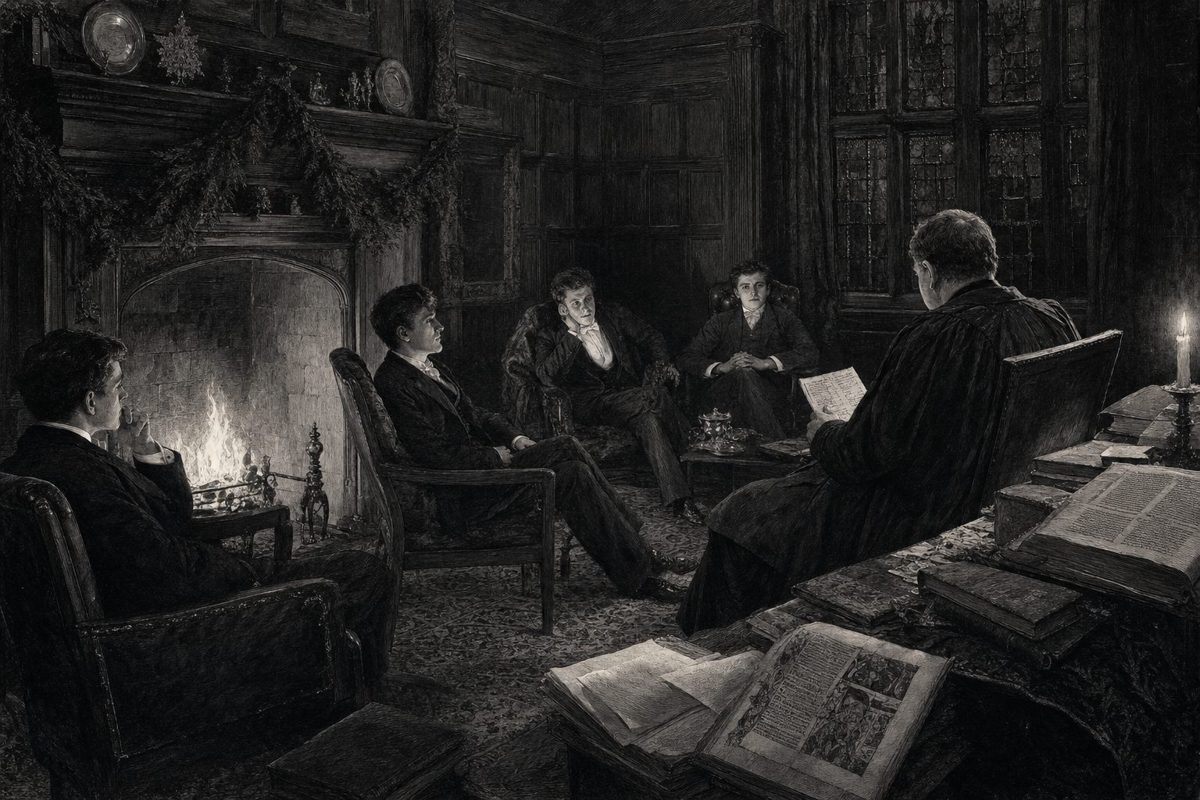
The numbers sold well enough that rival magazines brought out Christmas issues of their own, and a reader of the 1860s came to expect a ghost or two with the season. M.R. James was born in 1862, when the Christmas number was already a fixture. Decades later, as a fellow of King's College, Cambridge, he wrote a new ghost story most years and read it to friends and students in his rooms on Christmas Eve, with every candle put out but one.
What makes his ghosts work
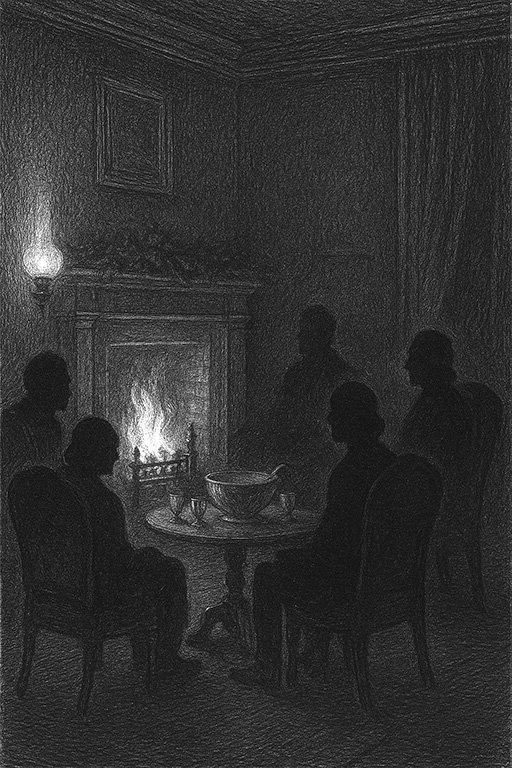
Dickens's hauntings usually reach us secondhand. Someone recounts them after dinner, or at an inn, or to a stranger who has climbed down into a railway cutting, and the listeners are part of the scene.
His ghosts also have business with the living. Marley comes to Scrooge with a warning and a schedule, and tells him to expect the first spirit when the bell tolls one. What comes back in a Dickens story is usually something the living have ignored.
When he wanted only to frighten, he wrote short. "The Signal-Man" runs to about five thousand words, and most of it is two men talking in a signal box beside a tunnel.
Where to read him
"The Signal-Man" is on our Story Shelf. Christmas Ghost Stories collects eight tales from the tradition he did so much to build. Gaskell's "The Old Nurse's Story," which he first printed, is one of them, and Edwards, M.R. James and E. F. Benson are there as well, each tale with its own introduction and illustrations. Our short history of why the Victorians told ghost stories at Christmas covers the custom in more detail.
Hear of new volumes first
Leave your address and we will write when a new book or a new story arrives.